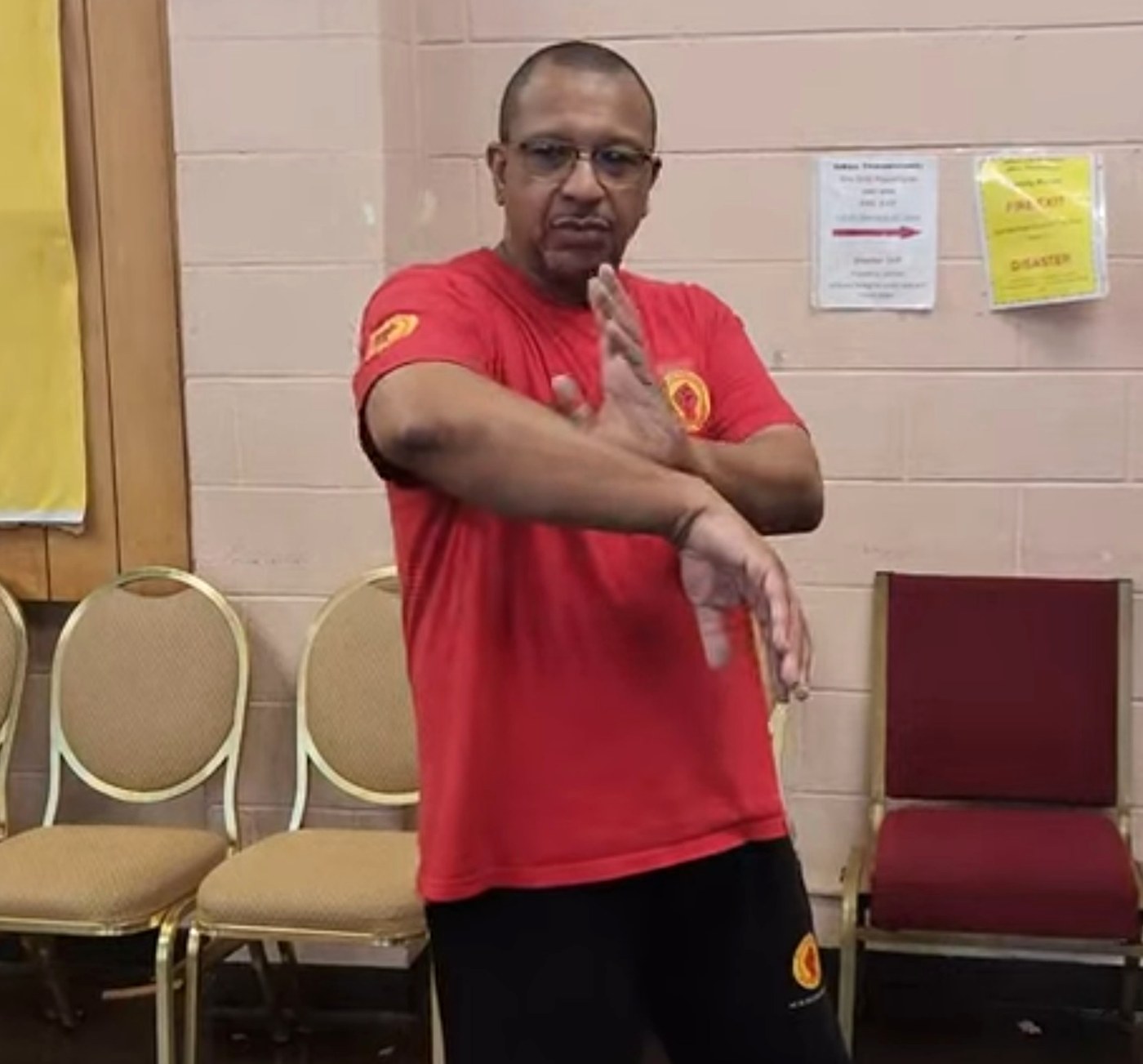
Shifu Ean Willis founded New Path in 2002 to teach WingTsun the way he believes it should be taught — against real situations, for people who may genuinely need it.
Shifu Ean Willis has spent more than forty years in martial arts, and over twenty-five of those studying WingTsun specifically. What he teaches is not a survey of styles — it is one system, understood deeply, and delivered the way it was given to him.
He opened New Path WingTsun Kung-Fu Sciences in 2002. The reason was straightforward: he wanted to teach self-protection to people on the South Side of Chicago who might genuinely need it, without diluting the art to make it easier to sell.
“New Path Wingtsun Kung-fu was not intimidating. Shifu Ean is knowledgeable and patient. I felt like I've known him all my life.”
Hands-on and corrected in the room. WingTsun cannot be learned from a video, because the entire art runs on feel — what your arms do when they meet pressure, at a speed too fast for the eye. That requires a person in front of you, adjusting your structure.
Classes stay small enough for that to actually happen. Nobody trains in the back of a room of forty people repeating a count.
New Path has taught mental, physical and spiritual health as part of the same curriculum since the beginning. That is not decoration around the self-defence — it is the point of keeping a practice for decades.
The goal was never to produce fighters. It was to produce people who do not have to be.
There are no colour belts here. Progress is marked by the shirt — and a shirt is never sold, it is earned. Every student starts training in their own clothes. The uniform begins only once you have shown up, trained, and demonstrated real dedication.
Advancing is not about time served or performing a form alone in the air. A student promotes by demonstrating the first section — or first two to three sections — of Siu Nim Tau, the first form, while someone is actually throwing punches at them. Clear that, and you move from beginner to First Level Technician. The forms are not graded in isolation here; they are graded under pressure, which is the same standard the rest of the school trains to.
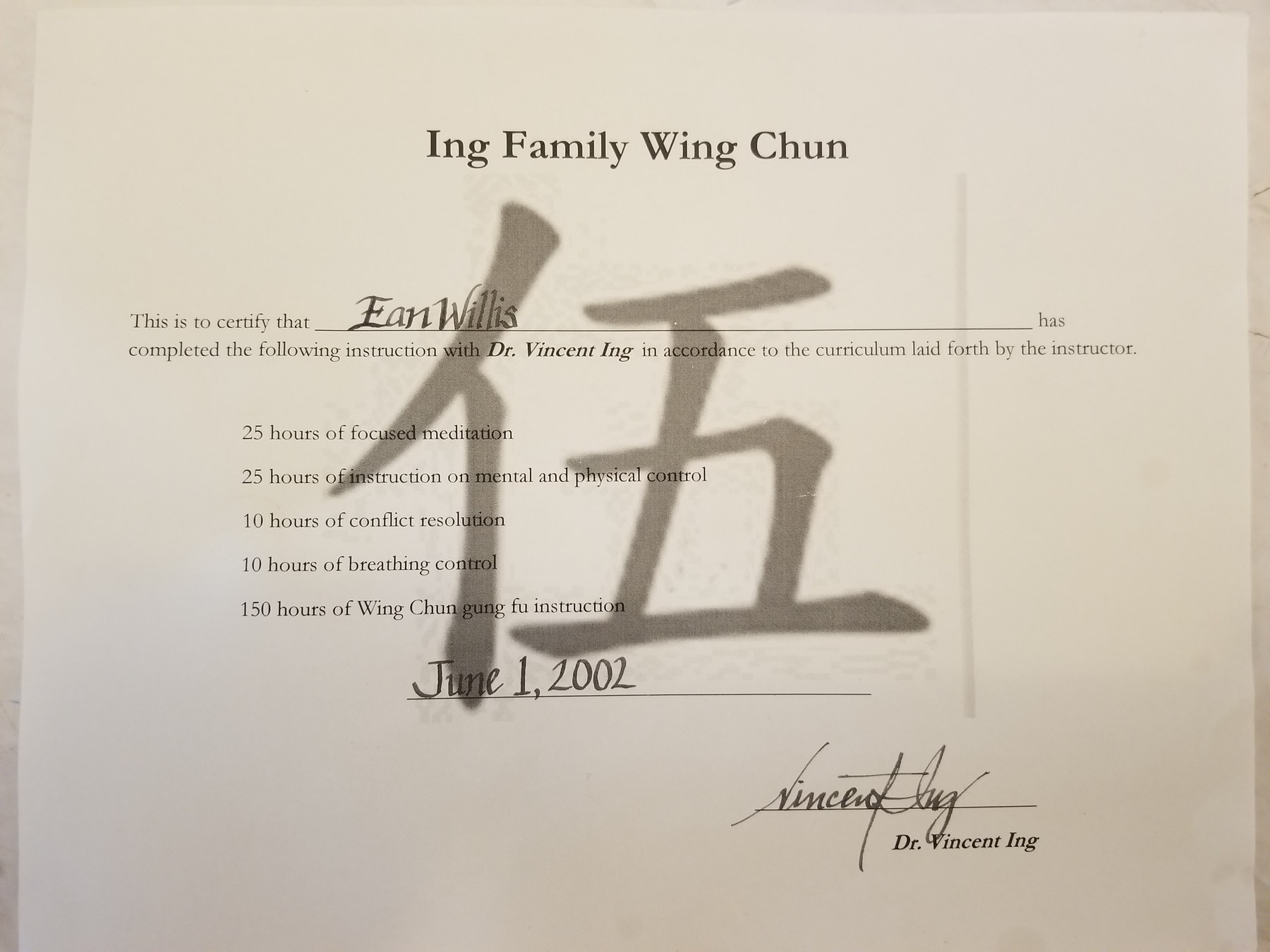
Shifu Ean Willis trained under Dr. Vincent Ing and was certified through Ing Family Wing Chun on 1 June 2002, having completed the curriculum laid out by his instructor.
The hours are itemised on the document itself, and they are worth reading closely — because only two thirds of them are fighting.
Seventy of those hours are meditation, breathing, mental and physical control, and conflict resolution. That ratio is not an accident, and it is the clearest answer to what this school actually teaches: the fighting is the smaller part of it. The art itself is built the same way.
Four decades of training across a martial arts life — long enough to have seen styles come into fashion, get diluted for the market, and go out again.
More than twenty-five of those years devoted to this one system. Not a survey of styles — one art, understood deeply enough to teach it without simplifying it.
Founded to teach self-protection on the South Side of Chicago to people who might genuinely need it, without watering the art down to make it easier to sell.
Three days a week on East 71st Street in South Shore, teaching adults, kids and one-on-one students — still correcting structure by hand, in the room.
New Path trains three days a week at the Don Nash Community Center on East 71st Street in South Shore. Programs run for adults, kids and teens, and one-on-one students.
If you want to understand what is actually being taught before you come in, start with what WingTsun is.
All classes are taught by Shifu Ean Willis, who has more than forty years in martial arts and over twenty-five years studying WingTsun specifically. He founded New Path in 2002.
New Path WingTsun Kung-Fu Sciences has been teaching in Chicago since 2002.
Classes are held at the Don Nash Community Center, 1833 E 71st Street, in the South Shore neighbourhood of Chicago.
Come train, see the room and the instruction for yourself, then decide. No monthly commitment attached to the introductory course.